
Ventura County Probate Division Overview
Probate in California is heard by the Superior Court, and Ventura County follows the same rule. The Ventura Superior Court probate division handles decedent estates, wills, trusts, guardianships of minors, and conservatorships of adults who cannot manage their own affairs. There is no stand-alone probate court in the county. Cases are filed at the main court complex in Ventura, and the public docket sits on the same eCourt platform that holds civil and family cases. A "probate" label on a result row may mean an estate, a trust, a guardianship, or a conservatorship, and each one has its own access rules.
Ventura County Probate Terms Defined
Probate uses a set of old legal words that confuse most first-time users. The short glossary below covers the terms that come up most often on Ventura County probate records search results and in the clerk's window.
- Testator
- The person who made the will. After death, the testator's will is lodged with the court and may be admitted to probate.
- Executor
- The person named in the will to carry it out. Once the court appoints the executor, the clerk issues letters testamentary as proof of authority.
- Administrator
- The person the court picks to handle an estate when there is no will, or when the named executor cannot serve.
- Intestate
- Dying with no valid will. State law then sets who inherits and in what share.
- Letters Testamentary
- The court paper that gives the executor power to act for the estate. Banks, title firms, and the IRS often ask to see them.
- Inventory and Appraisal
- The list of estate property with values. A court-appointed probate referee signs off on non-cash items.
- Guardianship
- A court order placing a minor's person or estate under the care of a chosen adult. Filed in the probate division for minors.
- Conservatorship
- A court order placing an adult who cannot manage personal or money matters under the care of a conservator. Also a probate division matter.
How to Search Ventura County Probate Cases
Probate case lookups are free. The public uses the county eCourt civil, family, and probate portal to find a case by name, case number, or filing date. Older files may not be fully scanned. For those, the clerk in Ventura must pull the paper file. The case inquiry page at ventura.courts.ca.gov is the official jumping-off point and lists portal links by case type.
Before you start, gather what you have. The decedent's full legal name. The year of death or the year a petition was filed. Any case number from prior court papers. A clean spelling helps, since the portal does not auto-correct names. For a conservatorship or guardianship, use the conservatee or ward name first, then the petitioner name as a backup.
- Open the official Ventura Superior Court case inquiry page and pick the civil, family, and probate portal link.
- Set the case type filter to probate, guardianship, conservatorship, or trust when the option appears.
- Type the last name first. Add the first name to narrow. Skip middle names unless results are too broad.
- Add a filing date range when the result list is long.
- Open the case row that matches the right person and the right filing year.
- Read the register of actions. Petitions, notices, orders, letters, and accountings should appear in order.
- Note the hearing dates and the department number for upcoming calendar items.
- If a paper is not online, ask the clerk for a copy and pay the set per-page fee plus any certification fee.
- If the case is sealed or restricted, the portal may show only basic data or no result at all.
The portal shows what the public is allowed to see under court rules. It does not show every paper in every file. Some old wills, sealed exhibits, and confidential reports stay at the clerk window or stay under judge-only review.
Ventura County Probate Portal Search Fields
The eCourt portal uses the same core inputs for civil, family, and probate cases. Field labels may shift a bit after a portal update, but the table below maps the core fields a Ventura County probate records search asks for.
| Field Label | Type | Required | Options / Format Notes |
|---|---|---|---|
| Case Number | Text | Optional | Exact probate case number when known. Best single input. |
| Last Name / Entity | Text | Optional | Decedent, conservatee, ward, petitioner, or other party. |
| First Name | Text | Optional | Narrows an individual search. |
| Case Type | Dropdown | Optional | Probate, guardianship, conservatorship, or trust. |
| Filing Date From | Date | Optional | Narrows by filing window. MM/DD/YYYY style. |
| Filing Date To | Date | Optional | Used with the from date to set a range. |
| Search | Button | N/A | Runs the query against the public probate index. |
Empty fields do not block a search, but a name-only query on a common surname can return a long list. Use case type and date range together to cut the result count.
Probate Division Contact
The probate division sits inside the main court complex in Ventura. Filings, calendar drop-offs, and clerk window work happen at the same address as civil and family. There is no separate probate courthouse.
Ventura Superior Court — Probate Division
Hall of Justice
800 South Victoria Avenue
Ventura, CA 93009
Mon-Fri business hours; verify by department on the court site.
The clerk window handles paper filings, copy requests, and lodging of original wills. Phone questions on calendar items go through the department clerk listed on the court site. The Ventura case inquiry page lists current contact paths for the probate division and points to the public portal for case lookups.
Wills and Estate Records in Ventura County
When a person dies in Ventura County and leaves property that needs to pass through court, an estate case is opened. The case starts with a petition for probate. The original will, if any, is lodged with the clerk. The judge then sets a hearing, the petitioner gives notice, and notice is published when required. If the judge admits the will, the clerk issues letters testamentary for the named executor or letters of administration when there is no will.
For real property that passed outside probate, the file may live with the Ventura County Clerk-Recorder instead of the court. Recorded deeds, affidavits of death of joint tenant, and small-estate affidavits often show up in the Clerk-Recorder's official records even when the court never opens a probate case.
Ventura County Guardianships and Conservatorships
Guardianship and conservatorship cases sit inside the probate division, but they involve living people. That matters for public access. The case docket may show the case exists, list petitions and orders, and post the next hearing date. Medical reports, court investigator reports, and personal financial data inside the file are often kept off the public side. A user reading a Ventura County probate records search result needs to keep that split in mind.
Four common case types blend together under the word "probate." They are not the same:
- Decedent estate: a case opened to settle the property of a person who has died.
- Trust petition: a case asking the court to approve a trust action, settle accounts, or remove a trustee.
- Guardianship of a minor: a case naming an adult to care for a child or a child's money.
- Conservatorship of an adult: a case naming a conservator for an adult who cannot manage personal or money affairs.
A name search may pull up cases from more than one of those types. Read the case type field on each result row before you assume it is the case you want.
How Probate Works in Ventura County
The standard probate path is fixed by California law and Ventura local rules. Even a clean uncontested estate must hit each step before the court will close the case. The list below tracks the path a Ventura Superior Court probate case follows from petition to discharge.
- Determine whether a full probate is required or whether a small-estate procedure applies under California law.
- Locate the original will, if any.
- File a petition for probate or appropriate petition in Ventura Superior Court.
- Give notice to heirs, beneficiaries, and interested persons.
- Publish notice if required.
- Attend the probate hearing.
- Obtain letters testamentary or letters of administration if appointed.
- Inventory and appraise estate property.
- Notify creditors and resolve claims.
- Account to the court and distribute assets.
- Petition for final distribution and discharge.
Timelines vary. A clean uncontested estate can still take months because notice, appraisal, creditor, accounting, and hearing steps must happen in order. The California Courts probate self-help page gives a side-by-side view of the same process at the state level.
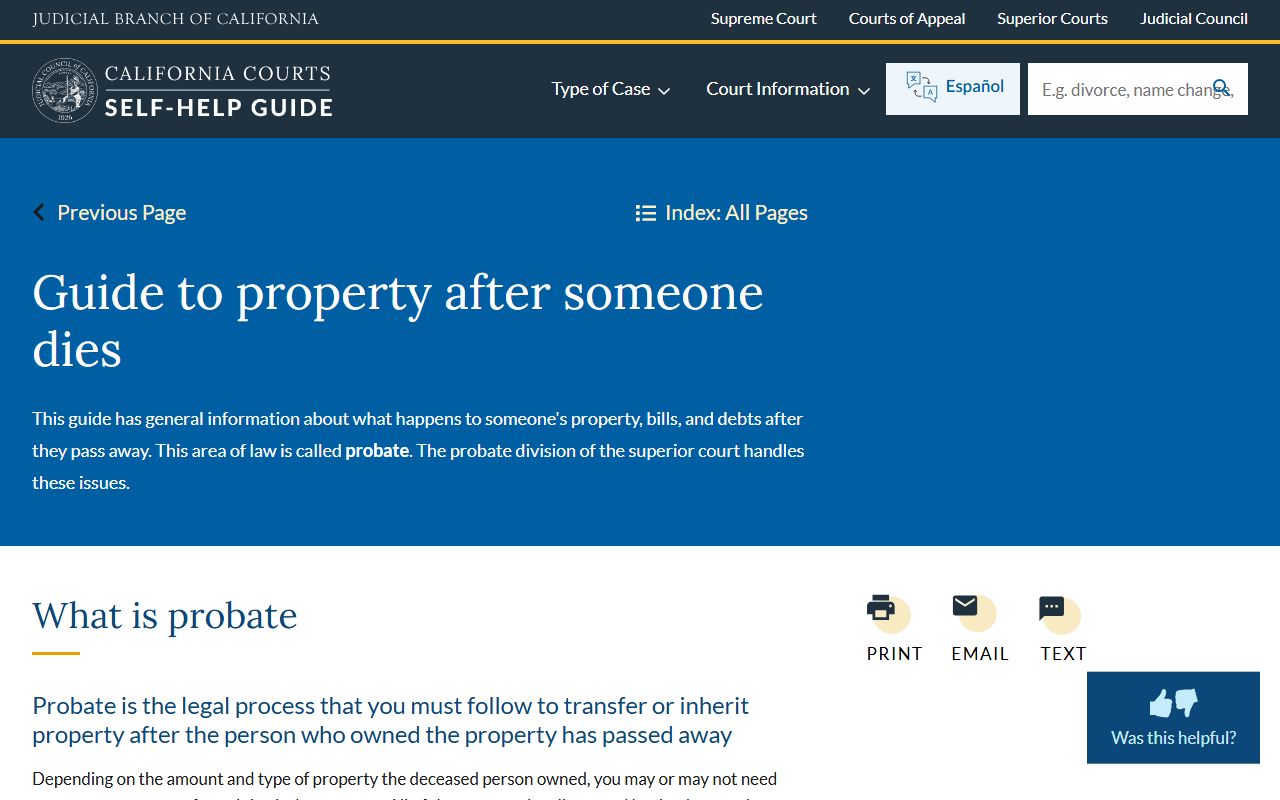
The self-help guide is written for filers who do not have a lawyer, but the same steps and the same paper names apply to a Ventura County probate records search done after the fact.
Ventura County Probate Fees and Copies
Probate filing fees in California are set at the state level, with some local add-ons. The Superior Court posts its current schedule on the official court fees page, and the clerk applies that schedule at the window and online. Real dollar amounts shift, so a Ventura County probate records search budget should track the current published numbers rather than memory.
| Item | Amount |
|---|---|
| Petition for probate of will or for letters | Set by current court fee schedule |
| Petition to appoint guardian of minor | Set by current court fee schedule |
| Petition to appoint conservator of adult | Set by current court fee schedule |
| Petition for final distribution | Set by current court fee schedule |
| Letters testamentary or letters of administration (per set) | Set by current court fee schedule |
| Plain copy of court record (per page) | Set by current court fee schedule |
| Certified copy (per document plus per-page fee) | Set by current court fee schedule |
| Search of court records by clerk (per name, per file) | Set by current court fee schedule |
People who cannot pay may apply for a fee waiver. The California Courts fee waiver self-help page walks through the income tests and the forms used statewide, including in Ventura.
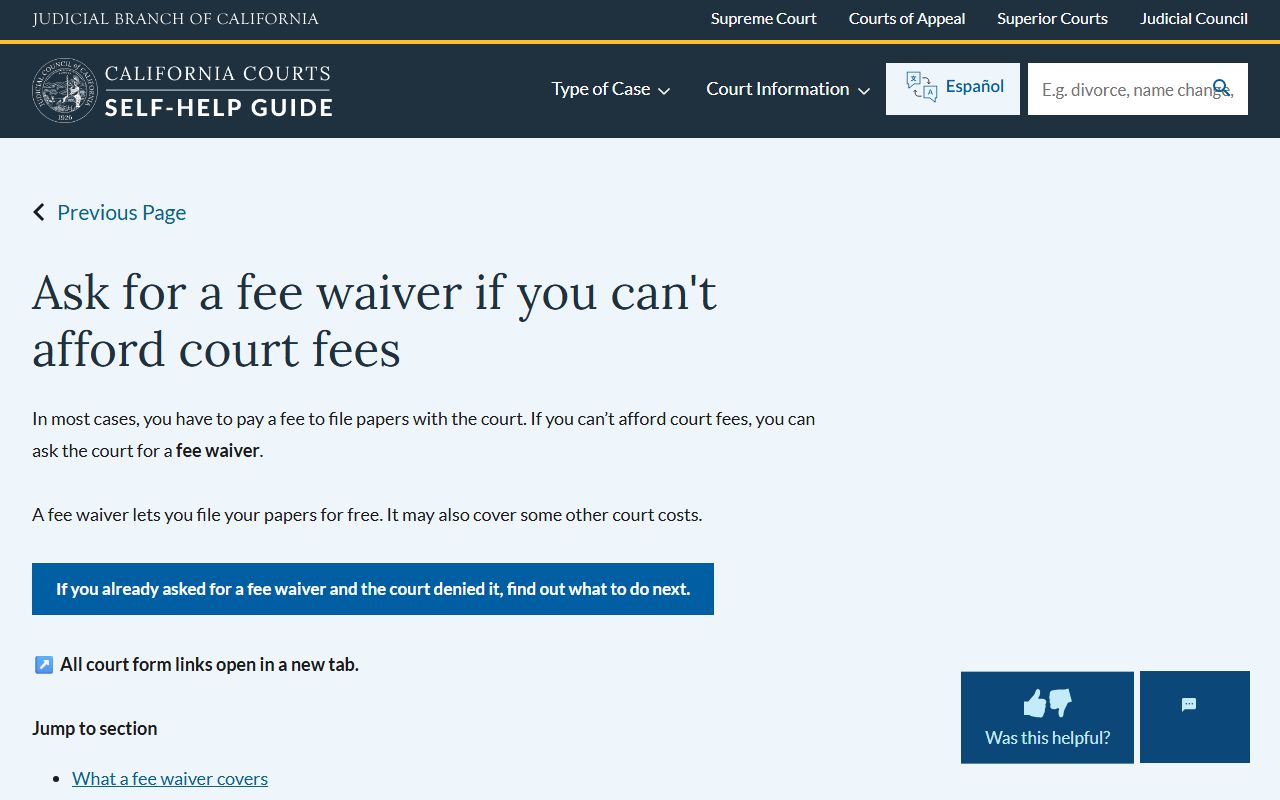
The fee waiver is filed with the petition, not after. A judge reviews it and signs an order. If granted, the filing fee is set aside; certified-copy fees still need a separate request.
Note: A certified copy of letters testamentary is the document banks, title firms, and the IRS most often ask the executor to produce.
What Ventura County Probate Records Show
A probate case file is not one paper. It is a stack. The list below covers the core records that a Ventura County probate records search may surface on an estate, guardianship, or conservatorship case.
- Petition for probate, original will, and the duties and liabilities notice for the personal representative.
- Letters testamentary or letters of administration as proof of authority to act.
- Inventory and appraisal, signed by a probate referee for non-cash items.
- Notice to creditors and any creditor claims filed against the estate.
- Accountings filed by the executor, administrator, conservator, or guardian.
- Petition for final distribution and the order closing the case.
- Court investigator reports, common in conservatorship cases and often restricted.
Confidential Probate Materials in Ventura County
Some probate papers stay out of the public side of the docket. Court investigator reports in conservatorship cases, medical evaluations, capacity declarations, and minor guardianship materials about a child are often kept under restricted access. Social Security numbers, full account numbers, and full dates of birth are redacted on otherwise public filings. A Ventura County probate records search may show the case and hearing dates without showing the protected documents inside.
Note: If a conservatorship or guardianship case looks blank on the portal, do not assume nothing was filed; protected reports may sit in the file behind a restricted access flag.
Small Estates and Nonprobate Transfers
Not every death needs a full probate case. California has small-estate procedures, beneficiary designations, joint tenancy, trust administration, payable-on-death assets, and other nonprobate transfers. A Ventura County probate records search may show no case at all when property passed outside the court. For real property handled outside probate, the paper trail often shifts to the Clerk-Recorder index, where affidavits of death of joint tenant, small-estate affidavits, and recorded deeds may appear even when the court file is empty.
Q: What if the eCourt portal shows no probate case for a person I know has died?
A: That can mean the estate fell under a small-estate or nonprobate transfer, that the case was filed in another county, or that the case is too old to be online. Check the Clerk-Recorder index for recorded affidavits, ask the clerk to pull an older file by name, or confirm where the decedent lived at death.
Ventura County Probate Self-Help
Many probate filers do not have a lawyer. The California Courts probate self-help center covers the basic rules, the forms, and the steps used in every county, Ventura included. Local self-help staff at the Ventura courthouse can answer process questions, but they cannot give legal advice.
Q: Can the court clerk tell me whether I need to file a full probate?
A: No. The clerk takes filings and answers how-to questions, but the choice between a full probate, a small-estate procedure, a trust path, or a nonprobate transfer is a legal question. The state probate self-help guide and a probate attorney are the right next stops.
For broader Ventura County court topics, see the Ventura County court records page. For dissolutions, see marriage and divorce records. For certified copies, see the Clerk of the Superior Court. For agency records under the state public records act, see public records. For the trial court itself, see Ventura County Superior Court. Common probate questions also sit on the court records FAQ.
Run a Ventura County Probate Search
Sponsored Results